
trading-inspiration | 11-12-25
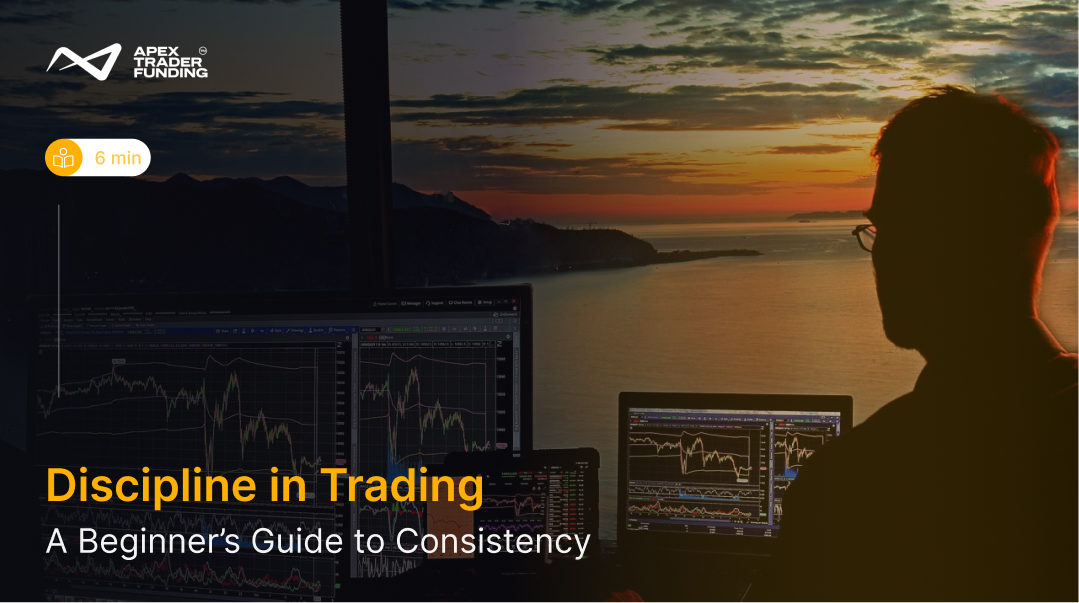
Discipline is the quiet force behind every successful trader. In markets where uncertainty is constant and emotions run high, discipline becomes the anchor that keeps decisions rational instead of reactive. In 2026, the reality of the "90-90-90 rule" remains stark: 90% of traders lose 90% of their funds within 90 days. This failure isn't usually due to poor strategy, but a breakdown in the automated and mental systems that enforce professional restraint.
Discipline is not about willpower or being “strong.” In trading, discipline is a system, a set of rules and behaviors that protect you when emotions run high and decisions feel unclear. It is the structure that turns chaos into clarity.
“Discipline is the bridge between a trading plan and a trading career.”
Why Is Discipline the Core Metric in Prop Trading?
Discipline is the primary filter for trading longevity because it transforms a strategy from a gamble into a business. While skill identifies market entries, discipline enforces technical "Kill Switches" and Daily Loss Limits. Adhering to these parameters ensures that a trader survives high-volatility events and maintains the emotional capital required for long-term consistency.
While many traders obsess over refining entry setups, history shows that the traders who thrive are the ones who master discipline. Professional performance in 2026 is often measured by a "7% Success Benchmark"—the small fraction of traders who utilize automated risk tools to stay in the game long enough for their edge to play out.
Discipline ensures you stop when you need to stop, wait when you need to wait, and act when your plan requires action. Without it, even the best strategy becomes unprofitable.
Technical Infrastructure: Automated Rules vs. Willpower
In 2026, professional discipline is enforced by software, not just mindset. To protect capital, active traders must utilize platform-specific "Kill Switches." For example, in Tradovate or NinjaTrader, you should manually set a "Daily Loss Limit" that prevents further orders once a threshold is reached. Similarly, using Rithmic’s risk manager allows for auto-liquidation thresholds that close all positions if your account equity drops below a predefined "Safety Net" level.
Key Forms of Discipline in Trading
Internal Discipline — Turning Rules Into Personal Standards
True discipline begins before a single order is placed. It starts with understanding your rules, defining your boundaries, and committing to act according to your plan rather than your impulses. Internal discipline means treating your trading rules as commitments, not suggestions.
It includes knowing exactly how much you risk per trade, how position size affects your emotions, and which market conditions you should avoid. When these guidelines become part of your identity, trading feels more structured and less chaotic.
Building a Professional Routine: Where Discipline Becomes a Habit
Successful traders don’t rely on motivation; they rely on routine. A structured trading day removes randomness, reduces emotional fatigue, and improves decision quality.
Strong daily routines often include:
- Pre-market preparation: defining key levels, scenarios, and setups
- Focused trading windows: avoiding boredom trading by limiting screen time
- Consistent market selection: mastering one or two assets instead of chasing everything
The more predictable your routine, the more predictable your results become.
Journaling: The Most Important Mirror for Your Mind
Expert Insight: Professional Journaling in the AI Era
In 2026, manual journaling is a hobby; Automated Analytics are a business requirement. Use tools like Tradervue, Journalytix, or WealthCharts to track your MFE (Maximum Favorable Excursion) and MAE (Maximum Adverse Excursion). Discipline is revealed in the data: if your MAE consistently hits 80% of your stop loss before a win, your discipline isn't the problem—your entry timing is.
A disciplined trader studies their behavior with the same seriousness they study the market. Beyond the numbers, a trading journal functions as a psychological mirror. It reveals the "invisible" patterns that lead to account breaches—emotional triggers, fear responses, and the overconfidence that often follows a winning streak.
Fighting Emotional Traps: The "30% Rule" Discipline
The market doesn’t just challenge your strategy—it challenges your self-control. One of the most dangerous emotional traps is the "Windfall Effect." Disciplined professionals aim for a smooth equity curve. If a single trade represents more than 30% of your total profit for the month, it is often a sign of over-leveraging or "revenge sizing" rather than skilled execution. True discipline means "diluting" that win with smaller, consistent trades to prove your edge is repeatable and not just a product of luck.
“The market doesn’t test your strategy first—it tests your self-control.”
Here are some of the most common traps and disciplined responses:
- Revenge Trading: Step away immediately once your Daily Loss Lock is triggered.
- FOMO: If the setup doesn’t meet every one of your criteria, let the move happen without you.
- Holding Losing Trades: Let the Auto-Liquidation threshold be your final line of defense; never widen a stop-loss manually.
Discipline is the ability to pause rather than react, to choose structure over emotion.
Practical Discipline Drills — Training Your Mind Like a Skill
Just like muscle memory, discipline strengthens with repetition.
- The Observer Drill:
Watch the market for one hour without entering a trade. This builds restraint.
- The One-Bullet Drill:
Allow yourself only one trade per day. You will naturally avoid low-quality setups.
- The Daily Reset Rule:
After a predefined loss limit, stop trading for the day to protect emotional clarity.
These exercises help rewire your decision-making toward structure instead of impulse.
Final Thoughts: Discipline Is the Edge That Never Fades
Every trader dreams of mastery, but only the ones who commit to disciplined behavior get there. Strategies evolve, markets change, and volatility rises and falls, but discipline remains a permanent edge. It protects your capital, stabilizes your mindset, and builds consistency over months and years, not just days.
FAQs
The three main types of discipline in trading are emotional discipline, strategic discipline, and procedural discipline. Emotional discipline helps you control impulses such as fear, greed, and frustration. Strategic discipline ensures you follow your trading plan, setups, and risk parameters without deviation. Procedural discipline keeps you committed to routines like journaling, pre-market preparation, and consistent review. Together, these three pillars form the foundation of long-term trading consistency.
Trade discipline is the ability to follow your trading plan consistently, regardless of emotions, market noise, or short-term outcomes.
It means sticking to predefined rules for entries, exits, risk, and position size, rather than reacting impulsively. Trade discipline helps traders avoid emotional decisions, reduce unnecessary losses, and maintain long-term consistency in their performance
Related Blogs
trading-inspiration | 24-08-25
Are Funded Trading Accounts Legit or a Scam?
In the last decade, a new question has captured the curiosity of traders worldwide: Can you really trade with someone else’s...
Read more
trading-inspiration | 29-08-25
Do You Have to Pay Back Funded Trading Accounts?
You are never personally liable for trading losses in a funded account because you are technically an independent contractor trading...
Read more
trading-inspiration | 05-09-25
What Happens if You Lose Money on a Funded Account?
Every trader dreams of gaining access to more capital. Funded accounts make this possible, offering a chance to trade larger...
Read more