


trading-inspiration | 05-01-26
For foundational mechanics, How to Day Trade for a Living by Andrew Aziz is the 2026 standard. To master probabilistic thinking, Mark Douglas’s Trading in the Zone is essential. If you are trading with limited capital, Don Singletary’s Day Trading Micro Futures for Income provides the specific leveraged risk-management framework needed for small accounts.
Diagnostic: Match Your Trading Error to the Solution
Before diving into the full library, identify your primary performance "bottleneck" to determine which resource will offer the highest immediate ROI for your account.
If you struggle with... | Read this Book: | Primary Takeaway |
|---|---|---|
Fear of entering a trade | Trading in the Zone | Probabilistic Thinking |
Holding losing trades | Best Loser Wins | Professional Loss Acceptance |
Over-leveraging small accounts | Micro Futures for Income | Unit Economics & Scaling |
Most beginners quit day trading not because they lack intelligence or motivation, but because they start with the wrong learning material. Many books are either overly academic—filled with formulas and theory—or aggressively promotional, implying that profits come quickly and effortlessly. Neither prepares a new trader for the reality of intraday markets.
The best day trading books for beginners strike a balance. They explain how markets actually move, how traders make decisions in real time, and most importantly, how to protect capital while learning. The books below are chosen not for excitement, but for clarity, realism, and long-term usefulness. Together, they form a grounded starting library that inspires disciplined action rather than false confidence.
“The right trading book doesn’t teach you how to win today—it teaches you how to survive long enough to improve.”
Best Day Trading Books for Beginners
How to Day Trade for a Living – Andrew Aziz (The Best All-Rounder for Beginners)

The best all-round day trading book for beginners is "How to Day Trade for a Living" by Andrew Aziz. It provides a comprehensive framework covering technical analysis, risk management, and platform setup. In 2026, Aziz’s strategies remain vital for navigating High-Frequency Trading (HFT) environments by focusing on high-probability "V-Reversal" and "ABCD" patterns.
This book is often recommended first because it explains what day trading actually looks like in practice. Aziz walks through market open routines, scanning for trades, managing risk, and accepting losses as part of the process. The tone is direct and realistic rather than motivational.
It is especially useful for beginners who want to understand:
- What traders do during a typical trading day
- How strategies are applied in real time
- Why consistency matters more than any single trade
Modern Context: In the 2026 HFT-dominated landscape, Aziz’s emphasis on "hotkey" execution and level 2 data is critical. He teaches beginners how to find "In Play" stocks that have enough institutional volume to withstand algorithmic noise.
Day Trading Micro Futures for Income – Don Singletary (Best for Futures and Micro Futures Beginners)

"Day Trading Micro Futures for Income" is the definitive guide for beginners trading CME Group micro contracts. It explains how to utilize the capital efficiency of the Micro E-mini S&P 500 while maintaining strict risk controls. This approach is highly favored in 2026 for its Section 1256 Tax benefits, which offer a 60/40 tax split on capital gains.
Singletary focuses on index futures and explains how they can be traded with smaller accounts and controlled risk. This book resonates with traders who:
- Prefer index-based trading over individual stocks
- Want exposure to CME Group products without large capital requirements
- Need to manage an Intraday Trailing Drawdown, common in modern prop firm evaluations.
Learning to Read Charts Without Overthinking
Technical analysis in 2026 requires a focus on price action over lagging indicators. For beginners, the best resources are John J. Murphy’s "Technical Analysis of the Financial Markets" for foundational chart patterns and Steve Nison’s "Japanese Candlestick Charting Techniques" for identifying real-time reversals through visual price cues.

Japanese Candlestick Charting Techniques – Steve Nison
Candlesticks are the visual foundation of modern charting. Nison’s work explains why certain candle formations matter. For beginners, mastering the "Hammer" and "Shooting Star" reversals is the first step in identifying when HFT-driven trends are exhausted.

Candlesticks are the visual foundation of modern charting. Nison’s work explains why certain candle formations matter and how traders interpret them. It trains the eye to recognize shifts in momentum rather than memorizing signals.
Together, these books help beginners move from confusion to familiarity with charts.
Trading Psychology: Where Most Beginners Actually Struggle
Why is Trading Psychology Critical for Beginners?
Trading psychology is critical because it bridges the gap between technical analysis and consistent execution. Most beginners fail due to "Amygdala Hijack"—emotional reactions to loss. Books like Trading in the Zone and Best Loser Wins teach traders to accept market randomness and manage Asymmetric Risk, preventing common psychological traps like revenge trading or FOMO.
Technical knowledge alone rarely causes success or failure. Emotional responses like fear, hesitation, and overconfidence usually do.
Trading in the Zone – Mark Douglas
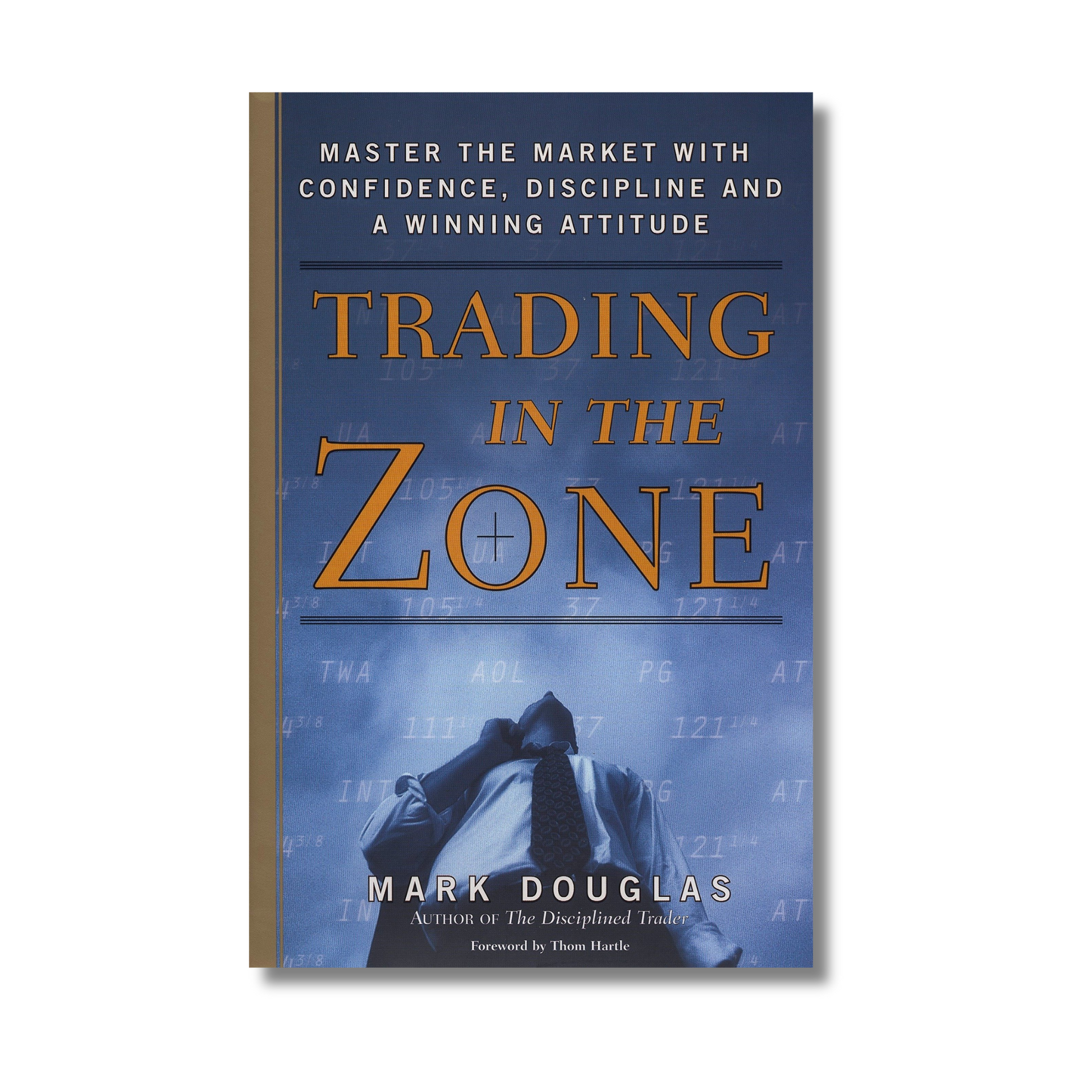
This book reframes trading as a probability-based activity rather than a prediction game. Douglas explains why individual losses are unavoidable and why consistency emerges only when traders stop seeking certainty. Many traders describe this book as the moment trading finally “clicked.”
Best Loser Wins – Tom Hougaard

Hougaard’s "Best Loser Wins" is the best book for mastering the discipline required for modern prop firm rules. It specifically addresses how to avoid the "Drawdown Trap" by accepting losses early. This is the essential manual for anyone trading with a "Trailing Threshold" where one large loss can end a career.
“In day trading, clarity comes from understanding the process, not from chasing shortcuts.”
Suggested Reading Order for Beginners
To avoid overload, beginners benefit from a structured reading path:
- Start with: How to Day Trade for a Living — understand the full landscape
- Then read: Trading in the Zone — prepare psychologically before risking capital
- Follow with: Best Loser Wins — reinforce discipline and learn how professional traders manage losses.
- Specialize with: Day Trading Micro Futures for Income — if futures is your chosen path
- Use as reference: Technical Analysis of the Financial Markets — alongside practice and simulation
This progression builds understanding, discipline, and confidence in the right sequence.
Final Thought
The best day trading books for beginners do not promise profits. They provide perspective. They teach how markets behave, how traders think, and why survival comes before success. When read with patience and applied slowly, these books do more than educate—they inspire a healthier, more sustainable approach to trading.
FAQs
Most day traders lose money not because trading is impossible, but because they enter the market unprepared for its demands. Common issues include inadequate risk management, trading without a tested plan, overtrading, and reacting emotionally to short-term price movements.
Many beginners also underestimate the psychological side of trading—fear, impatience, and the need to be right often lead to poor decisions. Successful traders focus less on winning every trade and more on controlling losses, staying consistent, and improving over time.
The 1% rule for day trading is a risk management guideline that suggests never risking more than 1% of your total trading account on a single trade. Its purpose is to limit the impact of losses and help traders stay in the game during inevitable losing streaks.
By capping risk per trade, the rule encourages disciplined position sizing and prevents one bad decision from causing significant account damage. While the exact percentage can vary by trader and strategy, the core idea is to keep losses small and manageable so consistency, not individual trades, drives long-term results.
Related Blogs
trading-inspiration | 24-08-25
Are Funded Trading Accounts Legit or a Scam?
In the last decade, a new question has captured the curiosity of traders worldwide: Can you really trade with someone else’s...
Read more
trading-inspiration | 29-08-25
Do You Have to Pay Back Funded Trading Accounts?
You are never personally liable for trading losses in a funded account because you are technically an independent contractor trading...
Read more
trading-inspiration | 05-09-25
What Happens if You Lose Money on a Funded Account?
Every trader dreams of gaining access to more capital. Funded accounts make this possible, offering a chance to trade larger...
Read more